The Role of Direct-to-Cell Satellite Protocols in Eliminating Cellular Dead Zones for Emergency Services

The Role of Direct-to-Cell Satellite Protocols in Eliminating Cellular Dead Zones for Emergency Services
Most regions where people live are covered by cellular networks, yet much of the landmass, coastline, and highway mileage of the planet still lacks a workable signal. Those gaps are far more than a nuisance for emergency services. A hiker with a broken ankle, a driver stuck after an accident or a family trapped in a wildfire might have no way to call for aid. Direct-to-cell satellite technology seeks to bridge that gap, allowing regular cellphones to communicate with satellites overhead using protocols that are very close to ones currently embedded into mobile networks. Rather than requiring a hefty satellite phone, the service treats a satellite as a cell tower in orbit. Mobile operators, handset makers and public safety agencies are now studying how this approach can be used to enable text messaging, location sharing and, eventually, voice and data. This article describes how direct-to-cell protocols work, how they help emergency response, and the hurdles that remain.
Why Cell Dead Zones Are Still a Public Safety Issue
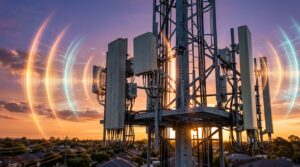
Terrestrial networks are created where the economics make sense. That leaves mountains, deserts, forests, open water, and remote routes with little or no coverage. Even in well-served areas, wildfires, floods, hurricanes and earthquakes can destroy towers, sever backhaul cables or halt commercial power, producing sudden dead zones where coverage usually occurs. Speed is critical in emergency response and every minute wasted searching for a missing person or waiting for a call to connect can influence the outcome. Many expect their phone will operate during a crisis and do not arrange for other ways to communicate. First responders often suffer when they are not able to get accurate location information from the individuals they are trying to contact. These gaps make coverage a real public safety issue, not just a matter of customer convenience, and explain the strong interest in satellite-based solutions.
How do Direct-to-Cell Satellite Protocols Work?
Direct-to-cell service means putting a cellular base station payload on a satellite in low earth orbit. The satellite features a huge phased array antenna that generates beams toward the ground and normally uses licensed mobile airwaves shared through partnerships with terrestrial network providers. To the phone, the satellite looks as just another cell in the network, which ideally means that no special hardware is needed. The standard LTE and 5G protocols have been customized for the great distances involved, using timing advance and frequency pre-compensation to address the delay and Doppler shift from satellites moving at about seven kilometers per second. However, other systems rely on dedicated messaging links, which require specific chipset support on newer devices. Both systems are trying to give users a simple experience where the phone automatically finds a satellite when there is no terrestrial signal.
Standards Bridging Terrestrial and Satellite Networks
Emergency communications need interoperability, and global mobile standards have evolved to accommodate it. Recent revisions of the 5G standard have included non-terrestrial network characteristics describing how devices and satellites synchronize, how handovers happen between fast-moving satellites, and how a satellite links to the core network via ground gateways. Satellite link optimized narrowband variations offer low-rate messaging with reduced power consumption suitable for quick emergency texts. Standardization means phones from different manufacturers can operate on many carriers and constellations, decreasing vendor lock-in and boosting competition. It also helps ensuring that identification, security, lawful access and emergency call handling are done to the same rules as terrestrial service. For public safety agencies, a standards-based strategy implies that the expenditures in training and equipment are more likely to be useful when technology and suppliers change.
Emergency Messaging, Location Data and Call Routing
The first satellite emergency systems were based on brief text messages since they use very little bandwidth and can still work with a weak connection. Usually, the SOS function is started by the user, who answers a few guided questions about the issue and allows the phone to append location coordinates from global navigation satellite systems. The message is subsequently sent straight to a public safety answering point or to a relay center with qualified operators who notify the proper local responders. As technology matures, the native integration with national emergency numbers means calls will be routed based on where the caller is, and the correct dispatcher will get the request. Accurate location data is especially crucial because dead zones are typically in remote places that are difficult to define orally. Message compression, call-back information and clear status updates further enhance the quality of the exchange.
Benefits for Search and Rescue Teams and First Responders
Direct-to-cell coverage offers a useful layer of redundancy for emergency responders’ existing communication capabilities. Search and rescue teams can be provided with accurate coordinates and last-known positions, which decreases search areas and the risk to rescuers. A satellite-enabled phone gives wildland firefighters, mountain rescue workers and maritime responders a lightweight backup to radios and dedicated satellite gear when they’re operating well out of reliable service. In a crisis, even if local towers are down individuals in the impacted areas can report casualties, blocked highways or residents stranded in their homes giving coordinators a fuller image of what’s happening on the ground. Satellite coverage can also decrease the requirement for temporary mobile towers during the initial critical hours of a response. Critically, it allows agencies to reach people who would otherwise be invisible to the emergency system, improving fairness between urban and rural communities.
Technical Limitations Affecting Emergency Reliability
The promise of direct-to-cell technology is true, but it also has actual physical limitations. Smartphones have small antennas and limited transmission power, and satellites are hundreds of kilometers away, therefore the link budget is tight and the signals can be quickly degraded. Dense woodland, deep gorges, automobiles and indoor situations are challenging. Users normally want an unobstructed view of the sky. All devices within a satellite beam share the throughput, and demand spikes during huge disasters could cause congestion and delayed messages. Satellites move fast and handovers complicate things and there can be short periods of non-coverage. Holding your phone in the air to get a better signal might also suck your battery faster. These limits show satellite messaging is a potent supplement and public education about proper use is still a vital component of any emergency approach.
Spectrum, Regulation and Public Safety Policy
The regulation will determine how quickly direct-to-cell service becomes reliable for emergency use. Operators in satellite bands have to obtain the right to operate in mobile spectrum bands and authorities have to ensure protection of terrestrial operators about detrimental interference. Frameworks are being developed to provide further coverage from space, although they vary from country to country and require careful coordination, especially because satellite beams cross national borders. Authorities are also setting standards for answering emergency calls, including location accuracy, call-back capabilities, outage reporting, and accessibility for persons with impairments. Data privacy is another problem because location and medical information is critical. Policymakers also must consider affordability — emergency features should be available no matter the income or subscription tier. “Developing a cohesive and dependable framework would necessitate close collaboration between regulators, carriers, satellite providers and public safety organizations.
The Future of Satellite-Enabled Emergency Communications (1)
The next generation of satellites will feature larger antennas and more powerful computers, leading to faster data rates and expanding the service beyond text to voice conversations and limited data. Handset manufacturers are integrating satellite bands and antenna enhancements into common smartphones, so more people will have access without having to purchase specific equipment. Wireless emergency warnings can also reach phones without terrestrial service, warning travelers and distant communities of storms, fires and other threats. The integration with future 6G networks will enable a seamless transition between ground and space. Coupled with drones, high-altitude platforms and enhanced ground infrastructure, these capabilities could significantly shrink the extent and impact of dead zones. That said, satellites will complement, not replace, terrestrial networks, and robust preparedness, clear public guidance, and dependable local infrastructure will remain vital to efficient emergency response.