How Low Earth Orbit (LEO) Satellite Megaconstellations Are Restructuring Rural Telecommunications Backhaul
How Low Earth Orbit (LEO) Satellite Megaconstellations Are Restructuring Rural Telecommunications Backhaul
For decades, rural telecommunications has been troubled by a basic but intractable economic problem: The cost of moving data from remote towns back to the core internet is significantly higher than those communities can generate in income. Laying fiber trenches across mountains, deserts and farmland is expensive because microwave relay chains need towers, power and frequent maintenance. Geostationary satellites provided an alternative, but with high latency and limited capacity, they were restricted to niche functions. Satellite megaconstellations in low Earth orbit (LEO) are changing that equation today. Now, thousands of tiny satellites orbiting a few hundred kilometers above the planet provide low-latency, high-throughput networks that can be a feasible middle mile and backhaul option. So mobile carriers, regional Internet service providers and public bodies are rethinking their network architecture. This article discusses LEO backhaul, why it is critical to rural connection, and the challenges ahead.
Why rural backhaul has always been the weak link
Backhaul refers to the section of a network that connects local access points, such as cell towers and community broadband nodes, to the larger internet core. In congested cities, this segment is cheap since there is already lots of fiber and each kilometer serves thousands of clients. In remote areas, the same kilometer might service only a few families, thus private investment is difficult to justify. Operators often use old microwave links, leased lines or slow copper connections that cut down on speed and reliability. Maintenance staff have an added strain from harsh terrain, unpredictable weather and unstable grid power that forces them to drive considerable distances for every repair. That means many rural and farming communities are left with poor cell coverage and crowded connections even when the last-mile technology is current. The main impediment to digital inclusion has been the backhaul bottleneck, not access technology.
LEO Mega-constellations Vs. Classic Satellite Networks
Traditional geostationary satellites are placed around 36,000 km above the equator. This results in round-trip delays that are frustrating for voice conversations, video conferencing and cloud services. LEO megaconstellations orbit at between roughly 300 and 1,200 kilometers altitude, which drastically reduces that delay. Each satellite moves swiftly across the sky, so a network needs hundreds or even thousands of them to provide continuous coverage. Ground terminals need to monitor them using steerable antennas. Modern satellites also use optical inter-satellite communications, which can bounce traffic through space before coming down to a gateway station. This mesh-like design eliminates reliance on local ground infrastructure and offers greater routing flexibility. Mass production has reduced the cost of manufacturing and reusable launch vehicles have reduced the cost of getting into space. For the first time in history, big fleets are commercially viable.
Latency and Throughput improvements get Practicality Backhaul
The key reason for telecom engineers to seriously consider LEO links as backhaul candidates is performance. Round trip latency is usually in the 20 to 50 millisecond range, similar to many terrestrial broadband connections and a world better than older satellite service. Capacity per terminal has also increased with corporate grade antennas capable of hundreds of megabits per second in various setups. That throughput is enough to handle traffic from a rural cell station serving a few thousand customers, including streaming video, mobile banking and texting. Lower latency enhances the performance of transport protocols, leading to faster web page loading and more responsive real-time applications. Quality of service elements such as traffic prioritization and dedicated bandwidth plans allow operators more predictable performance. Peak speeds are still subject to congestion, weather and sky visibility but the overall experience now matches the minimum standards that mobile network architects want.
Satellite Backhaul for Linking Rural Cell Towers
One of the most intriguing uses of LEO backhaul is to interconnect faraway mobile base stations that previously operated on restricted connectivity or not at all. At the tower site, a small terminal provides user traffic plus signaling and management data to a gateway that connects to the operator’s main network. The device is tiny and solar-powered with battery storage so allows operators to establish sites where grid connections or fiber are not viable. They take days to install, not months, because workmen don’t have to dig up trenches or get rights of way. Many operators are now coupling satellite backhaul with open radio access network technology and low-power small cells to further reduce costs. The strategy brings 4G and 5G connectivity to highways, mining areas, mountain villages and island towns formerly thought to be commercially unreachable.
Economic models for rural network deployment
The financial logic of rural telecommunications is changing as satellite backhaul alters the cost structure of network expansion. Operators can choose for a pay-as-you-grow approach paying a regular service fee per site and scaling up capacity as demand grows, instead of making big capex investments in long fiber lines. This decreases the investment risk, reduces the time to break even and is critical in low density markets. Governments and universal service programs are increasingly reorienting subsidies to technology-neutral projects, allowing satellite-enabled sites to compete for funding together with terrestrial installations. “We are starting to see satellite providers and national carriers entering into wholesale deals where they bundle bandwidth into predictable contracts. Meanwhile community networks and cooperatives can aggregate local demand to negotiate better pricing. In some circumstances the recurrent fees could be more than the long term fiber expenditures. However orbital backhaul is frequently the more attractive option given the rapidity of implementation and decreased up front load.
Hybrid Architectures: Combining Fiber, Microwave and Orbit
The most robust systems include a combination of different transport technologies, and few analysts expect LEO networks to totally replace fiber. In a hybrid architecture, fiber transports traffic along the main corridors, microwave links cover the secondary towns, and the most remote sites, or a diverse backup path, are covered by satellite backhaul. Software-defined wide area networking technologies can monitor link quality and automatically reroute traffic when a path weakens. The diversification helps with uptime especially in the case of natural disasters where fiber outages and power shortages are widespread. The satellite links have previously proved their worth for providing communication after floods, hurricanes and earthquakes. LEO capacity is also used by network designers as a bridge to serve a community quickly while planning and building fiber later. “The satellite link can be kept as a redundant path throughout time, protecting the original investment and strengthening the overall network.
Operators Encounter Technical and Regulatory Challenges
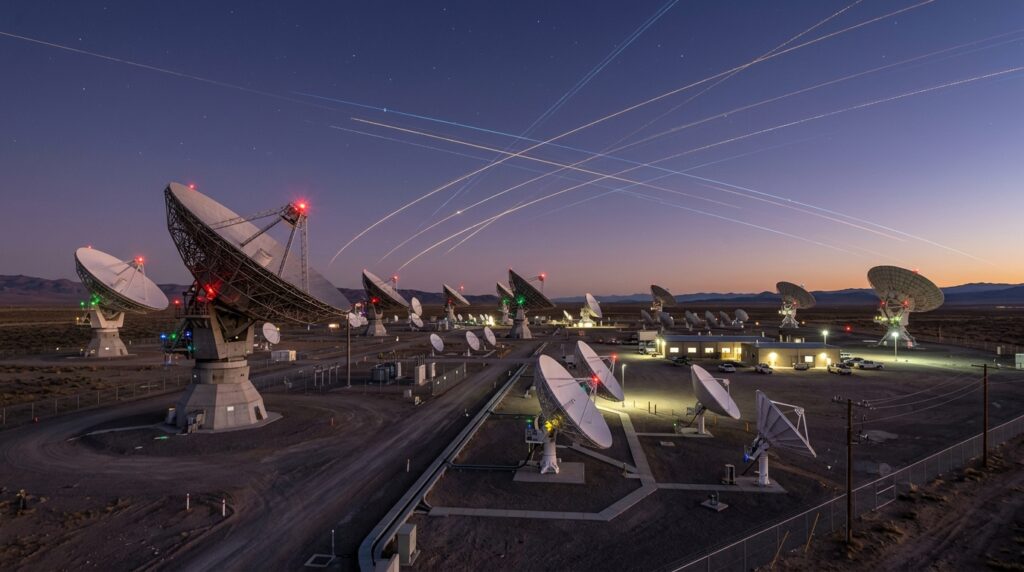
While there is significant advancement there are a number of technical and regulatory hurdles for operators. Users share capacity in each coverage cell, so demand in a region can slow speeds during peak hours. Terminals require an open sky view as trees, buildings or difficult terrain might impede service. International deployment is complicated by country to country differences in spectrum licensing, landing rights and gateway clearances. Regulators are tightening their standards because they are concerned about orbital debris, radio astronomy interference and the long-term sustainability of congested orbits. Security is another key consideration, because backhaul transports sensitive subscriber data that requires strong encryption and careful network segmentation to safeguard it. Relying on a single source also has commercial and geopolitical risks. Operators therefore want clear service level agreements, multi-vendor strategies and well-defined contingency plans before deploying key infrastructure to orbital lines.
The Future of Rural Telecommunication in a Space-Connected World
The convergence of satellites and terrestrial mobile networks will be further deepened in the future. Standards bodies are working on protocols that will allow non-terrestrial networks to be natural components of 5G and future 6G systems, making roaming, authentication and traffic management easier. Next-generation satellites will offer better capacity, improved on-board computing and more efficient use of spectrum, while competing constellations from different locations will increase choice and bargaining power for purchasers. The cost of deployment will continue to decrease with advances in flat-panel antennas and cheaper terminals. The impact on rural populations might be revolutionary, enabling telemedicine, remote education, digital payments and precision agriculture at scale. As these services grow more dependable and affordable, the digital divide between urban and rural populations may reduce dramatically. The restructuring of backhaul is thus not simply a technical change, but also a tremendous engine of economic and social progress.