The Operational Impact of Subsea Fiber Optic Cable Repair Bottlenecks on Regional Internet Traffic Rerouting
The Operational Impact of Subsea Fiber Optic Cable Repair Bottlenecks on Regional Internet Traffic Rerouting
Most international internet traffic flows through subsea fiber optic cables, which connect continents, data centers and mobile networks in calm strands of glass on the ocean floor. If one of these cables is broken by an anchor strike, fishing activity, seabed movement or deliberate interference, traffic is normally diverted to other accessible channels within seconds. The more difficult difficulty arises after that, because mending a broken cable depends on a relatively tiny worldwide fleet of specialist ships, limited spare parts, and good weather and permitting conditions. Such repair bottlenecks can extend recovery from days to weeks or even months, and leave regional networks operating at less capacity and with less redundancy. Here’s how long maintenance delays reroute internet traffic, why certain places are more exposed than others, and what operators, governments and cloud providers are trying to develop a more resilient underwater network.
Why Subsea Cable Faults Are an Increasing Concern
Each year there are well over a hundred subsea cable problems worldwide and most are the result of common human activity in busy coastal waterways. Fishing gear and ship anchors destroy cables in shallow zones, but underwater landslides, earthquakes and strong currents threaten routes in deeper places. Demand for cloud computing, video streaming and artificial intelligence workloads mean each cable carries more traffic than ever before. The effect of a single outage on national and regional connectivity is significantly greater than it was 10 years ago. At the same time, geopolitical instability has escalated fears of sabotage and the fragility of crucial digital infrastructure. Individual faults are not unusual and are typically handled but the combination of increased traffic loads and shorter repair times has raised cable damage from a normal maintenance issue to a strategic resilience risk.
How Repair Ships and Limited Fleet Capacity Lead to Delays
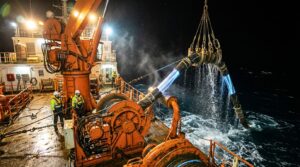
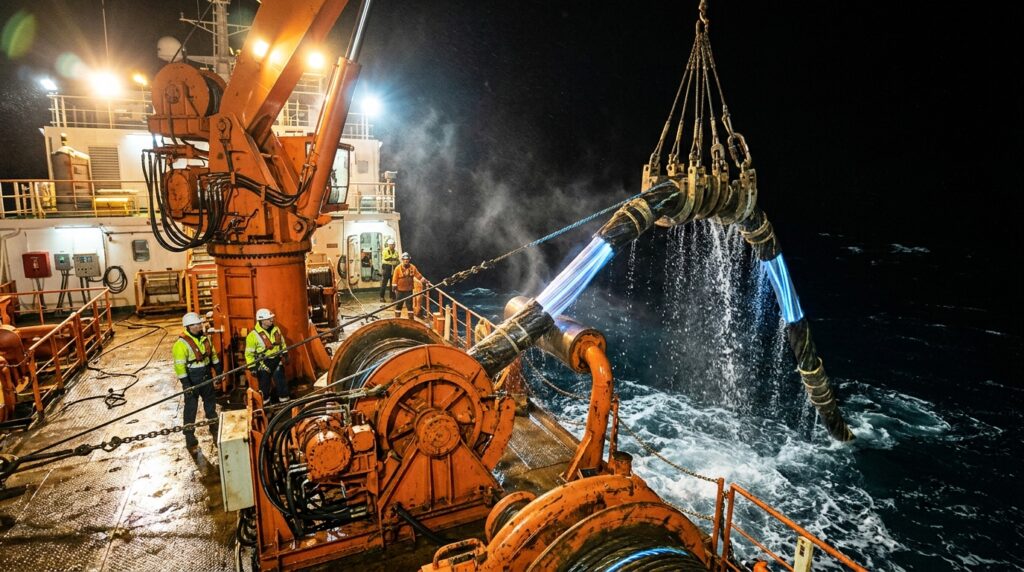
The repair of an undersea cable is a difficult nautical operation that cannot be done remotely or fast. A specialized repair vessel has to be sailed from its home port, equipped with spare cable and jointing tools, to the site of the defect which could be thousands of kilometers away. The crew find the damaged portion on site, raise both ends off the seabed using grapnels or underwater vehicles and splice in a new section on board the ship. The mended cable is then tested and gently dropped back down to the sea floor. Dedicated repair ships number only a few dozen ships in the world, many old, and only in a few parts of the world. When many failures occur at the same time, the ships must be scheduled one after the other, creating delays and thus increasing the outage windows.
Re-routing traffic: what happens in the first hours after a break
When a cable fails, network operators depend on automated methods to restore service as rapidly as feasible. When a path disappears, routing protocols such as the Border Gateway Protocol will identify it and start advertising alternatives, and optical restoration tools might transfer wavelengths to spare capacity on other systems. In many circumstances consumers simply see a brief interruption before the connections are reestablished. But it’s not as simple as switching things over, because other routes have their own capacity constraints, ownership structures and commercial agreements. Operators often have to buy emergency capacity, modify peering agreements, and rearrange traffic engineering policies on the fly. Engineers must also choose which services should be prioritized when bandwidth is constrained. The early hours of an incident are thus a careful balancing act between speed, cost and network stability.
Alternative Paths: Congestion, Latency, and Performance Drops
Once traffic is rerouted, the quality of service often degrades in obvious ways. Alternate pathways are sometimes longer, often routing data across continents, which increases latency and makes real-time services like video chats, online gaming and financial trading feel sluggish. The backup lines are sometimes already heavily loaded, and therefore rerouted traffic can create congestion, packet loss and inconsistent speeds, particularly during evening peak hours. Content delivery networks and cloud platforms try to mitigate the impact by providing popular content from local caches, but dynamic services and uncached content are still affected. Operators might slow low priority traffic, or restrict particular apps, to secure critical services. The longer the repair drags on the more these temporary fixes become a persistent operational burden that highlights vulnerabilities in network design.
Most Vulnerable Regions for Extended Outages
But not every area is at equal risk when a cable snaps. Island nations and small coastal economies generally rely on just one or two international cables, thus a single outage can wipe out much of their external capacity. Other sections of the world such as parts of Africa, the Pacific and the Middle East also share corridors and similar landing stations so one incident might take down multiple systems at the same time. “Many cables passing through narrow marine chokepoints are clustered within a short geographic area, increasing the chances of numerous cuts from a single event.” Countries that are less connected by land to nearby states have fewer choices for rerouting by land. Here, a maintenance bottleneck is not just an inconvenience, but a long-term nationwide disturbance affecting government services, businesses and people alike.
Economic and Social Impacts of Extended Repair Windows
The prolonged delays in repairing have significant economic effects that go far beyond the telecoms sector. Banks and payment processors may see slower transactions, e-commerce platforms could miss out on sales, and outsourcing organizations that serve clients overseas may find it difficult to satisfy service commitments. Remote employees, online students, and telemedicine patients have had choppy sessions and unreliable connections. Small firms without redundant internet links are especially susceptible as they can’t readily absorb days of interrupted service. Connectivity outages can impact tourism businesses that rely on online bookings and digital payments. Persistent interruption over time might deter international investment and harm a region’s reputation as a reliable digital hub. It’s these cumulative impacts that are making governments consider subsea cable resilience as an economic security priority, not just a technical issue.
Geopolitical, permitting and security barriers to fast-tracking repairs
Administrative and security difficulties can delay the job even if a repair ship is available. In territorial waters you may need permits from a variety of authorities, and it can take days or weeks to get approval depending on local regulations and diplomatic relations. Due to dangers to crew safety and equipment, shipowners and insurers are sometimes reluctant to deploy ships in areas where conflict or dispute is affecting the area. Storms, significant cargo traffic and strong currents can further limit safe working windows. Cables are typically owned by consortiums of corporations, meaning that choices about repairing them have to be coordinated amongst numerous parties, who may have different objectives and budgets. Spare cable stocks may also be located far from the impacted area, adding to shipment and customs delays. These non-technical impediments often dictate the length of an outage, no matter how technically proficient the repair personnel are.
Strategies to Reduce Bottlenecks and Build Resilience
Repair bottlenecks demand work on numerous fronts at once. New cable lines bypass congested chokepoints to promote physical variety. Regional repair depots and pre-positioned spare cable cut mobilization time. To speed up response, shipowners and cable operators are looking at larger fleets, pooled maintenance agreements and streamlined permitting processes. Technologically, distributed acoustic sensing and better monitoring tools provide faster threat and problem detection. Terrestrial links between neighboring countries, powerful internet exchange hubs and local hosting of content lessen the need for long-haul pathways. Satellite links in low Earth orbit can give emergency backup capacity for key services during protracted outages. Ultimately it will take a multi-pronged approach of more cables, faster repairs and improved traffic management to ensure regional networks have the resilience they need as global dependency on subsea infrastructure grows.