How Strict Referrer Policies Break Image Hotlinking Within Authorized Affiliate Network Dashboards
How Strict Referrer Policies Break Image Hotlinking Within Authorized Affiliate Network Dashboards
Affiliate marketing systems are highly reliant on the use of common promotional assets such as banners, product photos, brand logos and campaign graphics that publishers embed inside their very own websites. To make content distribution easier and guarantee affiliates constantly display the latest marketing materials, several networks give image URLs that can be linked to without having to manually download. This method, also known as image hotlinking, allows dashboards to deliver centrally controlled visual assets and also ensures uniform branding across many partner web sites. But today’s browser privacy improvements and increasingly severe referral regulations can accidentally break those procedures. Images that previously loaded without issue can now fail to appear in authorized affiliate dashboards or publisher websites, despite users having valid access to the resources. Understanding how referrer restrictions affect browser requests helps developers and affiliate platform managers deliver secure content without disrupting authorized marketing activities.
Referrer Policies Explained
A referrer policy determines how much information a browser will send about the webpage it came from when accessing external resources. When a browser loads an image, script, stylesheet or other asset from another server, it may provide a referrer value, which indicates the site making the request. This information is used by website administrators for analytics, security validation, access management, and traffic tracking. Modern browsers offer a range of referrer policy settings, allowing websites to decide whether outbound requests should include full addresses, only the origin, or no referrer information at all. These policies allow greater user control of privacy, while limiting unnecessary revelation of surfing activity.
How It Works : Hotlinking of Images
picture hotlinking is when a website uses images that are hosted on a different server . Instead of storing a local copy of the picture , it links directly to the image on the other server . When you load a web page , your browser requests the picture from the server that hosts it . The server sends the image data back to your browser to be shown . This is a widely used method by affiliate networks since it streamlines campaign management and makes sure that promotional images are consistent among thousands of publishers who join in. Any changes you make to the original image will immediately show up in all places where the shared asset is embedded. That is, affiliates won’t need to manually replace old files.
Why Referrer Info is Important for Affiliate Dashboards
Many affiliate platforms secure advertising assets by validating that image calls are made by authorized websites or allowed dashboard environments. Referrer information helps ensure that requests are originating from valid sources and not from third-party sites that are seeking to re-use marketing collateral without permission. When the browser provides expected referrer information, the hosting server can verify if the requesting page meets predefined access regulations. Even if the user is legitimately authorized inside the affiliate network, the server may refuse the request if the required referrer information is not accessible or insufficient due to restrictive browser restrictions.
The Impact of Strict Referrer Policies on Compatibility
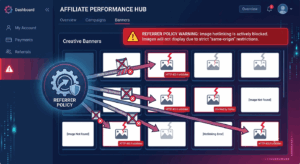
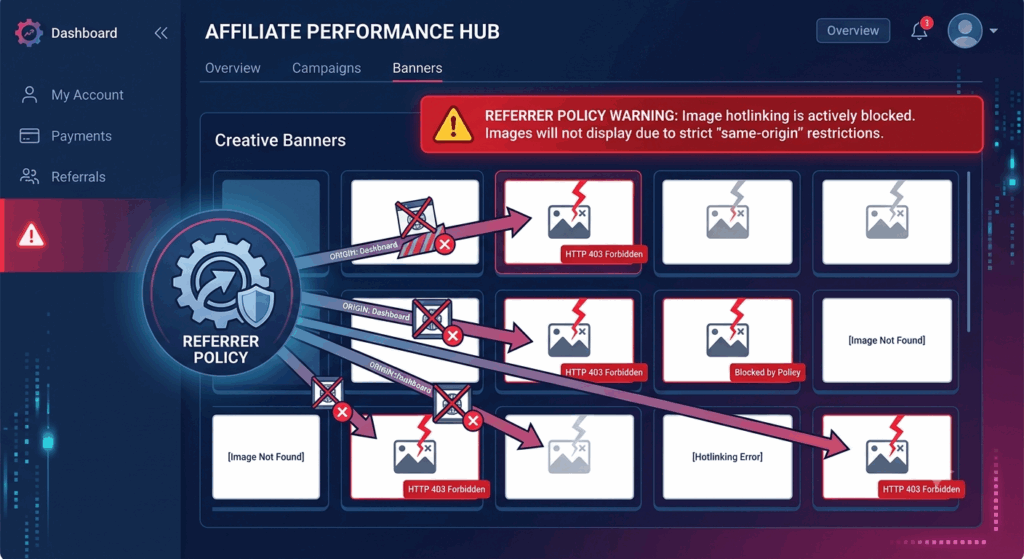
Strict referrer rules aim to improve user privacy by restricting the amount of data that browsers send when retrieving external resources. These regulations are good at preventing unneeded data from being exposed, but they can also strip out information that image hosting platforms use to validate requests. If an affiliate platform requires full referrer information and receives only partial origin information or none at all, its security protocols may falsely flag the request as illegitimate. As a result, browsers will display missing graphics even when users are completely logged on approved affiliate dashboards.”
Usual Signs of Referrer Policy Conflicts
Referrer-based compatibility concerns often lead to uneven behavior across browsers and operating systems. Depending on their browser configuration some affiliates may see the promotional visuals correctly and others may not see them at all. The dashboard pages themselves generally load OK but embedded banners, logos or product images are often blank or show placeholder graphics. Even when the network is available and the user is logged in, it is common to see failed picture requests in browser diagnostic tools. Because the root reason is request validation, not missing image files, debugging can be difficult unless referrer policies are considered during investigation.
Resource Authorization and Privacy
Modern web construction puts a growing emphasis on user privacy while ensuring secure access to internet resources. Referrer regulations are a key part of this endeavor, as they restrict unnecessary sending of browsing information. Organisations delivering protected digital materials, meanwhile, need reliable ways to differentiate between legitimate requests and illegitimate use. Designing authorization systems based solely on referrer information can lead to avoidable compatibility issues as browser privacy policies continue to evolve. With flexible validation algorithms, you can balance security against the variety of browser implementations and privacy settings.
Developer Guidelines
Developers running affiliate platforms need to consider how resource authorization interacts with current browser privacy capabilities when implementing tight access limits. Testing image distribution across different browsers, operating systems, and referrer policy settings helps catch compatibility issues early. Monitoring unsuccessful resource requests can give significant insight into authorization patterns that may reveal too stringent validation procedures. Aligning server configurations with current browser behavior provides better long-term compatibility with evolving web privacy standards. These techniques are what let enterprises produce accurate images, without sacrificing overall security.
Creating Content Delivery for Affiliates That is Future-Proof
As browsers continue to improve privacy protections, referral handling will remain a growing area of modern web development. Affiliate networks that understand the interplay of referrer policies, browser request behavior, picture hotlinking, and resource permission can develop more robust content distribution systems that can adapt to future browser changes. Organizations can provide strong protection against the use of resources by unauthorized affiliates while ensuring that authorized affiliates have uninterrupted access to promotional assets through careful security design, comprehensive compatibility testing, effective resource management, and appropriate authorization strategies. This technique enables trusted affiliate marketing activities in a privacy-first browser environment that is increasingly relevant.