Why Session Storage Fails to Persist State Across Iframes Embedded from Third-Party Subdomains
Why Session Storage Fails to Persist State Across Iframes Embedded from Third-Party Subdomains
Modern online apps use a lot of embedded material to provide interactive features without the user leaving the current page. Payment gateways, analytics dashboards, document viewers, authentication portals, customer service widgets, and collaborative tools are typically loaded inside iframes hosted on various subdomains or even on different domains altogether. Session storage is a browser feature that retains data in a single tab until a browsing session ends, and developers often utilize it to store temporary user data while surfing. Developers, however, are typically startled when session storage does not persist state across iframes embedded from third-party subdomains. The data that seems to be available in one surfing context may be totally unavailable from another, even if both are shown on the same webpage. Understanding how browsers isolate storage between multiple origins lets developers design more dependable web apps, by knowing why this behavior happens.
How Modern Browsers Understand Session Storage
Session storage is a web storage technology that stores data on the client side momentarily in the browser during a session of browsing. Unlike persistent storage methods that continue beyond the lifetime of a browser window, session storage is only available throughout the lifetime of a browser tab or window. Developers often use it to remember temporary application settings, user interface states, navigation progress, form entries, and other short-lived information that should be cleared after the browsing session ends. Session storage works solely within the browser . Getting the information stored is usually fast and efficient , and does not require communication with distant services .
Why the Same-Origin Policy Matters
One of the key security aspects of current web browsers is the same origin policy. This strategy limits the possibilities of unauthorized information exposure and malicious assaults since web content cannot easily access data of other websites. An origin is usually determined by the protocol, domain and network port used to view a webpage. This policy treats addresses that differ solely by subdomain as different sources, even if they look similar. Thus, storage connected with one origin is separated from storage associated with another origin, even if both are displayed in the same browser window.
How Iframes Create Separate Browsing Contexts
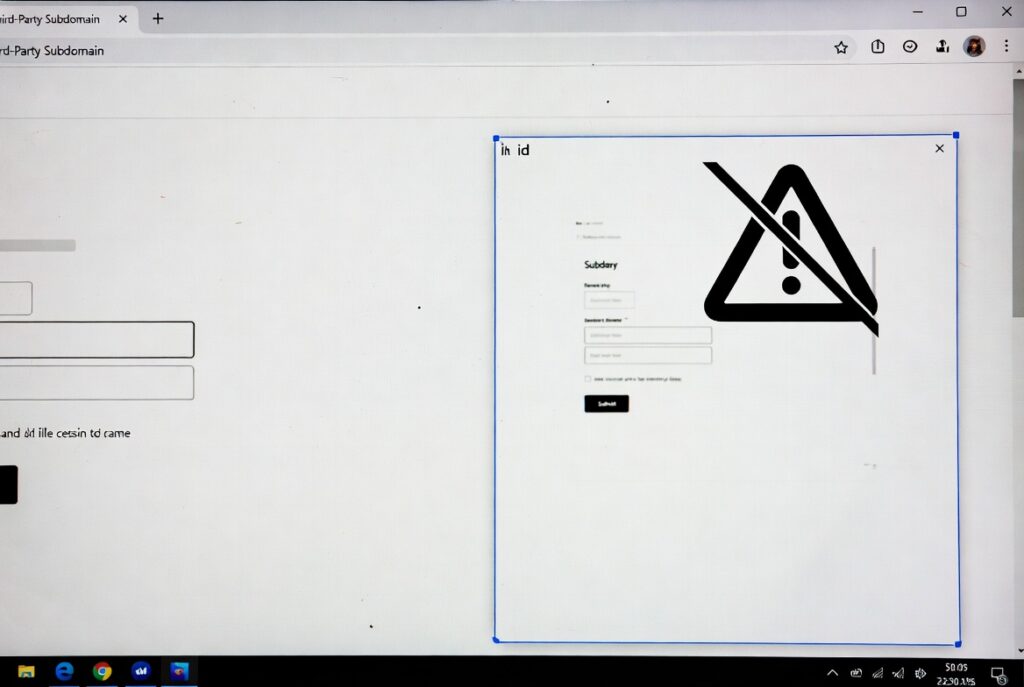
An iframe is a way to put one webpage inside another webpage, while keeping the two pages in independent execution contexts. The information inside the embedding is rendered visually as part of the parent site, but it is a separate browsing context with its own document, scripts, storage, and security limits. If an iframe loads content from a third-party subdomain, the browser considers the embedded site to be a whole different origin. This gives the iframe its own isolated session storage region which has no direct access to information kept by the parent site or other unrelated embedded frames.
Why session storage can’t be shared across third-party subdomains
Developers could anticipate closely related subdomains to share temporary storage because they are part of the same organization or application ecosystem. But browser security models divide storage by origin, not ownership. A parent web page hosted on a domain can not automatically read or change the session storage belonging to an embedded iframe delivered from another subdomain. Similarly, the iframe cannot directly access temporary data held by the parent program. This isolation protects users from cross-site access without permission, but it also prevents embedded third party content from gathering sensitive information that belongs to unrelated browsing contexts.
Browser Privacy Features Enhance Storage Isolation
Modern browsers are increasingly increasing their privacy features to stop cross-site monitoring and unwanted data exchange. Also, storage partitioning, site isolation and increased privacy settings restrict the interaction of embedded third-party material with browser storage. Such restrictions can further separate closely similar services even when hosted on various domains. With browsers moving toward respecting user privacy, assuming that the storage would be shared automatically is becoming less and less safe. Browser security standards are shifting, thus apps that used to rely on implicit storage access across embedded content may need new communication channels to function.
Understanding Common Signs of Application
When session storage isolation impacts applications, embedded content that depends on session data can trigger multiple login requests, lost navigation progress, temporary preferences that are not saved or workflows that are not completed. Users can successfully authenticate in the parent application, and then be prompted by an embedded service for authentication again. Temporary state information being kept separated inside various browsing contexts can suddenly reset multi-step forms across numerous embedded components. These symptoms often seem inconsistent until developers realize that each origin has its own completely isolated session storage environment even though they visually appear to be integrated into the same webpage.
Other ways to share temporary state
Developers should use communication mechanisms intended expressly to enable secure access between various contexts instead of direct access to session storage for cross-origin access. Structured messaging is used to convey transient information between parent pages and embedded frames, while honoring browser security limits. Server-side session management can also be used temporarily to synchronize shared application state across many domains without leaking sensitive information directly in the browser storage. Using explicit communication routes between apps rather than assuming shared client-side storage increases dependability in modern browsers and privacy-first environments.
Designing Secure Web Applications Across Multiple Domains
As enterprise platforms, collaborative services and cloud applications continue to move towards distributed architectures, embedded content across different domains will remain a frequent design pattern. Browser security models will continue to improve origin isolation to preserve user privacy and reduce security threats. Knowing how session storage interacts with same-origin restrictions, iframe isolation, and browser privacy capabilities helps developers create apps that behave in predictable ways without having to depend on unfettered storage access. By employing secure communication techniques and respecting browser storage limits, companies can design secure multi-domain web apps that keep temporary application data, all while staying in line with modern web security standards and the dynamic nature of browser technology.