The Practical Effects of High-Bandwidth Memory (HBM) Production Capacity Constraints on Enterprise Hardware Availability
The Practical Effects of High-Bandwidth Memory (HBM) Production Capacity Constraints on Enterprise Hardware Availability
High-bandwidth memory has evolved from a niche component to one of the most keenly monitored parts in the entire technology supply chain. Modern AI accelerators and high-performance computing processors may do calculations far quicker than conventional memory can feed them data. To bridge that gap, engineers stack numerous memory dies on top of each other and put them right next to the processor, which greatly widens the data flow. The technique has excellent bandwidth and energy efficiency but is extremely hard to manufacture and just a few of suppliers globally can make it at scale. Demand from cloud providers, research laboratories and large corporations has skyrocketed, and supply has failed to keep up. The deficit is now impacting shipments of accelerators, server configurations and even the price of conventional memory modules. The essay discusses why HBM capacity is so tight, how the scarcity flows across the hardware supply chain, and how enterprise purchasers can plan around it.
The Rise of High-Bandwidth Memory in Today’s Accelerators
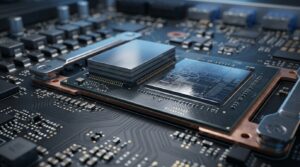
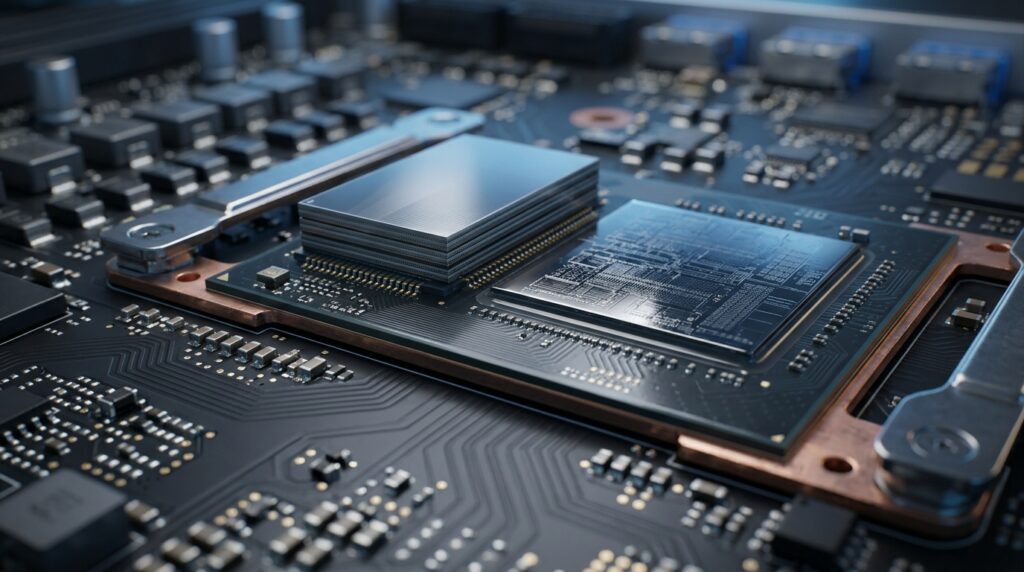
To train and run, large language models need to move huge amounts of parameters and intermediate data between memory and computing cores per second. That traffic cannot be provided by conventional memory attached via a standard motherboard interface . This is a bottleneck that is often referred to as the memory wall . HBM tackles this problem by stacking memory very close to the processor and connecting it by thousands of parallel signal channels, giving many terabytes per second per accelerator. Costly computation cores would be idle without it, waiting for data. With each successive generation of accelerator, more stacks, taller stacks, and larger capacity per package are added, so the memory content of a single device keeps increasing. The reason demand for HBM was greater than every prior projection was growing accelerator volumes times growing memory content per device.
Why is HBM so difficult and slow to manufacture?
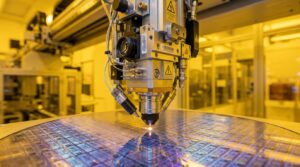
An HBM stack consists of a number of DRAM dies that have been made extremely thin, to a fraction of the width of a human hair, and drilled with thousands of tiny vertical connections, called through-silicon vias, and linked together using microscopic bumps. Common are stacks of eight, twelve and now sixteen dies. A single bad layer can spoil the whole stack. So manufacturers have to test each die before stacking, then test again postfacto, which extends the length of production cycles. They also have lower yields than conventional memory. The increased device area and via architectures imply that each wafer yields much fewer useful bits. Industry estimates have HBM at about three times the wafer capacity per bit of regular DRAM. But it takes several months to learn how to raise yields and you cannot just flip on equipment to increase capacity.
How advanced packaging creates a second bottleneck
Even if memory stacks are available, they have to be integrated with the processor using high-end packaging. Most leading accelerators employ a silicon interposer, a small sheet of silicon with precise wiring that connects the processor die to its neighboring memory stacks. Interposer production capacity is limited, and larger accelerators demand larger interposers, meaning that fewer interposers can be cut from each wafer. There is also a shortage of the specialized bonding, inspection and test equipment as well as the high quality substrates that carry the finished package. Any delay in any of these phases stalls the entire accelerator, regardless of how many memory stacks have been generated. The memory makers, foundries and packaging partners have to work closely together and validating each new combination of memory and processor might take months. So the packaging slots are now worth as much as the memory itself.
Long-Term Contracts and Distribution Among Hyperscale Buyers
With supply so tight, memory makers now sell most of their HBM output well before it is made. The large cloud players and prominent accelerator companies get capacity through multi-year contracts, generally backed by prepayments and collaborative planning. The accelerator producers also pre-qualify specific memory suppliers and speed grades for each device, locking in long-term purchase patterns. This creates a tiered market where the biggest buyers get first dibs, and the smaller customers have to wait their turn. And additionally producers like higher margin products and HBM has a big price premium over traditional memory. Enterprises, regional cloud providers and research institutes without substantial committed volumes have a more difficult time getting accelerators with the settings they require. In actuality, access to memory is as much a function of the strength of commercial ties as it is of the ability to pay
Supply and price spillover effects in conventional DRAM
HBM is not produced in a vacuum, it is produced in the same plants that make standard memory. As manufacturers transfer wafer production to HBM for higher margins, there is less capacity available for server memory modules, mobile memory and DRAM used in personal PCs. Since HBM takes up more wafer area per bit, each wafer you turn also removes more conventional supply from the market. Therefore, the impact in terms of greater cost and extended lead time for large DDR5 modules is felt by enterprise buyers that go with standard servers without accelerators. The densest modules, the ones of choice for virtualization, database and in-memory analytics, are typically the first to see contract price increases. This spillover often catches procurement teams off guard who believe that the lack of specialized memory would not impact general purpose servers. In actuality, the entire memory market is tightening.
Lead Times for Accelerator and Enterprise Server
The most obvious effect for companies is that systems with accelerators will take longer to wait for. High-end accelerator boards can have lead periods of many months, and server manufacturers cannot build up a system without the full complement of accelerators it is designed to handle. Partial deliveries do not assist, because if one board is missing on an eight-accelerator server, it can not ship. The OEMs may limit the amount of configurations that are accessible to them, or postpone the lower priority orders, or suggest other models with differing memory sizes that would need to be revalidated. Quotes are less accurate, claimed delivery dates can alter due to upstream allocation on a quarter by quarter basis. Delays might also hurt firms creating artificial intelligence clusters by delaying product launches, research initiatives and internal digital transformation projects, and complicating budgeting for data center space and power.
How Enterprise Buyers and Systems Makers Are Evolving
Organizations are reacting with a combination of earlier planning, flexible design, and software optimization. Procurement teams are planning ahead for their needs for accelerators and memory, committing to multi-quarter buys and sharing their demand forecasts with vendors to get in line. Some purchasers are standardizing on fewer configurations to make allocation easier. Some are looking at accelerators that have different types of memory for inference applications where the need for excessive bandwidth is not as important. Engineering teams are working to reduce memory consumption through quantization, model reduction, and more effective batching that allows existing hardware to serve more people. Staged deployments allow enterprises to bring capacity online incrementally instead of waiting for a whole cluster to be available. Renting cloud capacity can fill brief term needs. Another feasible approach is to extend the service life of earlier generation hardware, provided that power and cooling restrictions allow.
Outlook on Memory Supply and Plans to Expand Capacity
Memory makers are sinking big money into new production lines, more packaging capacity and next-generation designs. Newer generations of HBM promise more bandwidth, more height, and in some cases a special logic base die built on modern foundry methods, which requires extra cooperation between memory makers and foundries. Techniques such as hybrid bonding may potentially enable for more dense stacks with improved thermal performance, but they require new equipment and yield learning. It takes years to build a memory fabrication plant and to qualify its output, and each new generation resets a section of the production learning curve. Analysts also caution that excessive expansion could eventually lead to oversupply if demand growth slows. But tightness is likely to prevail in the near term. “Early planning, flexibility in configurations and investing in efficient software will help enterprises get the gear they need.