How Neodymium Magnet Supply Fluctuations Affect Enterprise Hard Disk Drive (HDD) Storage Manufacturing
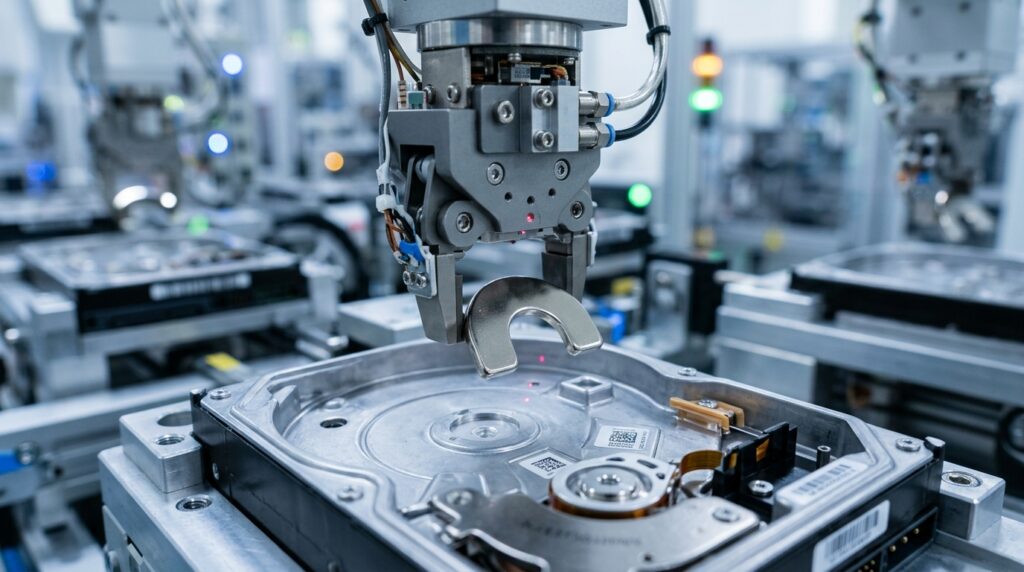
How Neodymium Magnet Supply Fluctuations Affect Enterprise Hard Disk Drive (HDD) Storage Manufacturing
Enterprise hard disk drives remain the economic backbone of bulk data storage, housing the archives, backups, video libraries and training datasets that cloud providers and big corporations can’t afford to retain on flash alone. Inside each of these drives, a pair of minuscule neodymium-iron-boron magnets help position the read and write heads with incredible speed and accuracy, while other magnets help spin the platters at stable speeds for years. The quantities are small, usually a few grams each drive, but the supply chain that supports them is thin and subject to regulation, pricing and demand from other industries such as electric automobiles and wind power. As the availability of neodymium tightens, drive manufactures are feeling the effect through delayed motor deliveries, higher component costs and tighter production planning. Eventually, data center buyers will have longer lead times and less predictable prices. This article discusses the impact of neodymium magnet supply fluctuations to enterprise hard disk drive production and how the industry can maintain resilience.
Why Neodymium Magnets Are Critical to Enterprise Hard Disk Drives
The performance of a hard disk drive relies on positioning a read and write head over a spinning platter with nanoscale accuracy. This is thanks to the voice coil motor , a component that employs a strong magnetic field to swing the actuator arm in response to tiny electrical currents . Neodymium magnets are used by the engineers because they provide the maximum magnetic strength per unit size enabling the engineers to construct actuators that are compact, quick and energy-efficient. Many spindle motors additionally use neodymium magnets to keep the platter stack spinning at a steady speed, typically seven thousand two hundred revolutions per minute in corporate models. High-capacity nearline drives have multiple platters and heads so that accurate and forceful actuation becomes even more crucial. If these magnets had to be replaced with inferior materials, it would mean bigger motors, more power and slower seek performance.
What Drives Neodymium Supply and Price Movements
Neodymium is not a scarce element in the Earth’s crust, but the extraction, separation and production of magnets is concentrated in a few countries, making them vulnerable to governmental decisions and regional disturbances. Prices might spike when governments impose export licensing, change output limitations or strengthen environmental regulation at processing plants. The storage industry is in direct competition with demand for electric vehicle motors, wind turbines, robotics and consumer electronics. These industries often purchase much bigger volumes and may get higher costs. Neodymium is also manufactured with other rare earths, therefore output is partly driven by demand for other elements. Magnet makers spend months qualifying new supply and expanding capacity, limiting the system’s speed of response. So little changes in demand or policy can lead to price swings that move through the whole chain.
How Magnet Shortages Ripple Through the Motor and Component Chain
Hard disk drive manufactures seldom buy raw magnets directly. Instead, material flows from alloy makers to magnet fabricators, to suppliers that make voice coil assemblies and spindle motors, and then to drive assembly plants. Each step adds sintering, machining, plating, magnetization and quality testing. A disturbance at the start can take weeks or months to manifest in the end. Motor providers are specialized and scarce in number and therefore often keep limited buffer stock of finished magnets. As allocation tightens they tend to favor their greatest customers or most profitable product lines, and smaller programs get left in the cold. Drive manufacturers may not realize the problem until they begin to slide on shipping confirmations. This leads to delayed visibility, making early warning impossible, and why magnet shortages regularly surprise planners who solely monitor their direct suppliers.
Effect on Production Schedules and Plant Output
Drive assembly is a closely choreographed operation in cleanroom environments, with head stack assemblies, platters, motors and printed circuit boards arriving in carefully timed batches. Expensive heads and media can lay unused for lack of voice coil motors or spindle motors, as none of these parts will substitute for another. Factories could respond by lowering production of lower-margin products, reconfiguring capacity for the highest-volume enterprise models, or delaying the rollout of new product generations. Qualification makes it even harder. A new supplier magnet must be examined for consistency of magnetic flux, corrosion resistance and particle production, because stray particles within a sealed helium drive might damage the heads. Rushing the testing might lead to reliability problems that show up months later in the customer fleets. So manufacturers often prefer timetable delays over cutting savings.
Cost Pressures and Margin Effects for Drive Makers
Although neodymium is a minor part of a drive’s total bill of materials, price volatility still matters, as drive manufactures operate on thin margins in a competitive industry. The cost of magnets is going up, and suppliers are often passing the increases on to motor assemblies. The drive builder either absorbs the final cost or passes it on to customers in the form of price modifications. Long-term contracts for large cloud buyers push cost change effects into the future, but those contracts typically involve periodic assessments. Currency swings, freight expenses and taxes can amplify the impact. Because the industry has only a few big producers, a cost shock tends to hit them all at the same time, leading to broad price rises rather than competitive absorption. These oscillations, repeated over time, also make it tougher to foresee financially and can constrain the finances available to do research on next generation recording technology.
Implications for Acquisition of Data Center Storage
Data center operators are facing magnet supply issues in the form of longer reported lead times, allocation letters and volatile prices for high-capacity drives. Storage clusters typically scale in huge chunks, so a delay of even a couple of weeks can push back capacity launches for cloud services, backup systems and analytics environments. Cost per terabyte rises and budget plans are distorted. Some operators are obliged to buy more expensive flash-based storage to cover short-term needs. Others extend the life of older drives, risking failure and increasing the operational expense of replacement. AI workloads create huge amounts of data that must be kept, thus demand for capacity continues to grow even while supply is constrained. Procurement teams, therefore, are able to predict storage requirements sooner, communicate demand forecasts to suppliers, and spread orders over many drive suppliers and models.
How Magnet Risk is Managed by Motor Suppliers and Drive Makers
Top producers are putting more resilience into their sourcing practices. They negotiate multiyear supply contracts with motor suppliers, require visibility into magnet source, and in some cases help pay for inventory buffers at key sub-tier suppliers. You have two sources from different locations so you’re not relying on one country. Each source has to be qualified separately and it can take a good amount of time to get approved. Engineers also collaborate with magnet makers to reduce material use by designing better magnetic circuits, using thinner magnets and applying better protective coatings that prolong life and reduce scrap in the manufacturing process. Yield is boosted further by recycling cutting and grinding trash within magnet plants and remelting it into fresh metal. Scenario planning and regular risk evaluations can help procurement teams discover weak links before shortages happen. They add cost modestly yet protect output and client connections when markets become volatile.
Technology Trends and Long Term Outlook for HDD Magnets Demand
Slowly, technology progress may minimize the amount of magnet material required for each terabyte held. Heat-assisted magnetic recording and related techniques are boosting areal density, allowing a single platter to store much more data, which translates to fewer drives and fewer magnets per exabyte of capacity. Rapid data expansion also means that overall drive shipments will remain big so magnet need will not vanish. Research is carried out on motor designs using a reduced amount of magnet material or other grades of magnets, however the rigorous precision requirements of actuator systems limit the alternatives. The diversification of mining and processing in other regions as well as increased recovery from industrial scrap in the coming years could lessen concentration risk. However, periodic volatility is likely to continue, and firms that combine disciplined sourcing with efficiency-driven engineering will be best positioned to sustain consistent corporate drive output.