Why “Zero-Click Discovery” is Forcing Publishers to Move from Pageviews to Brand Mention Metrics
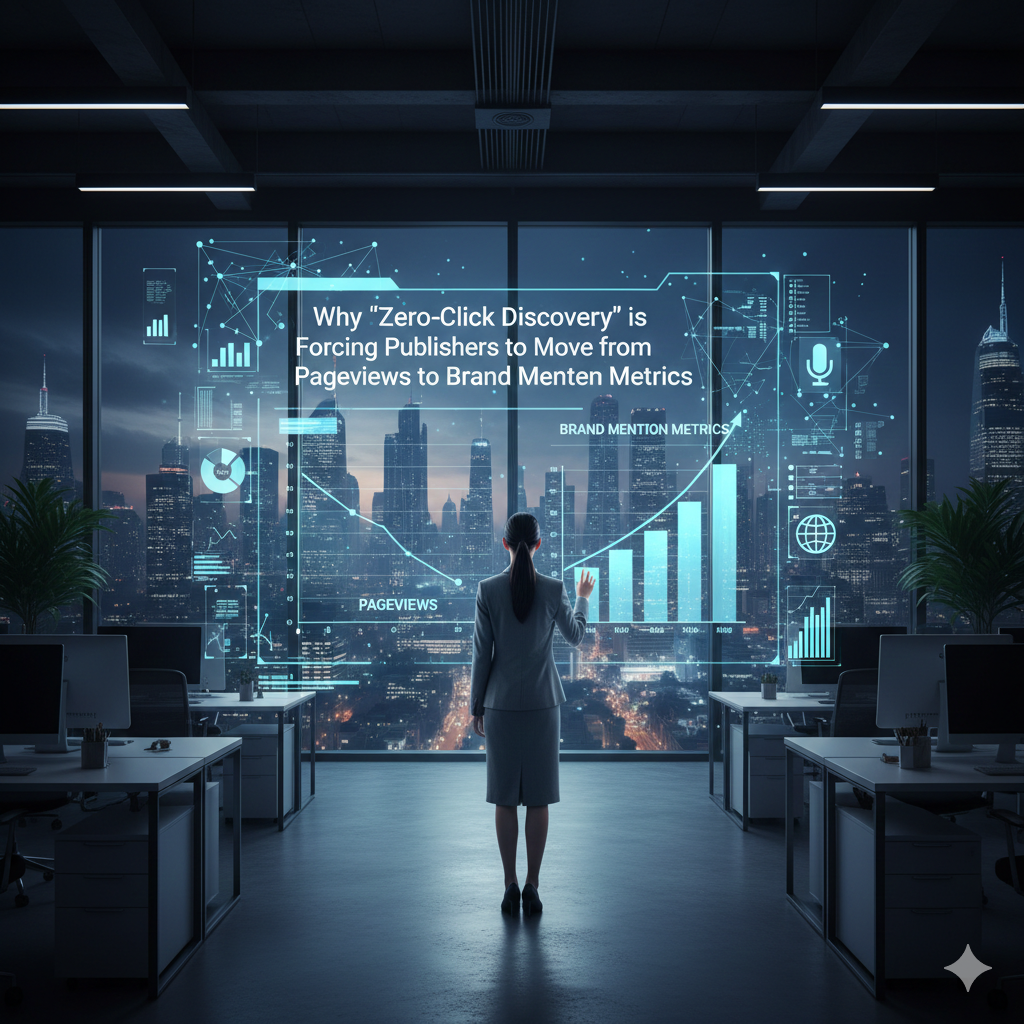
Why “Zero-Click Discovery” is Forcing Publishers to Move from Pageviews to Brand Mention Metrics
There has been a significant shift in the way viewers interact with online material and how publishers evaluate their achievements as a result of the proliferation of zero-click discovery. The term “zero-click discovery” refers to the process by which people acquire information straight from summaries, snippets, or aggregated overviews that have been created by artificial intelligence without ever having to click through to the source website. AI-driven interfaces are becoming the key gateway for information, which is diminishing the dependency on conventional search result pageviews. This trend is increasing as a consequence. A major decrease in quantifiable traffic, which has traditionally been the foundation of advertising income, performance metrics, and audience insights, is the consequence for publishers. This situation has resulted in a considerable loss in traffic. As a consequence of this, marketers and media firms are moving their attention to alternative performance measures. These indicators include the number of times their content is quoted, referred, or discussed inside AI summaries and other channels that need zero clicks. This transition necessitates the development of new techniques for the production of content, the optimization of structured data, and the engagement of audiences. Publishers are now need to take into account both visibility inside AI systems and conventional user involvement in order to strike a balance between the requirement to adhere to developing measurement requirements and the need to preserve brand authority. This pattern is indicative of a more widespread transition in the digital ecosystem, in which the effect of content is assessed less by the number of clicks and more by recognition, reach, and the authoritative presence of brand content across platforms that are mediated by artificial intelligence.
Recognizing the Concept of Zero-Click Discovery
The term “zero-click discovery” describes circumstances in which consumers are able to acquire the information they need without directly accessing the source of the original material. Artificial intelligence (AI) overviews, chatbots, and voice assistants often provide synthesized insights, summaries, or replies immediately in response to questions posed by users. The audience is becoming more and more reliant on these systems for instant access to information as they continue to improve in terms of both accuracy and convenience. Publishers are left without insight into the frequency with which their content is consumed indirectly since traditional pageview analytics are unable to capture this form of interaction. In order for publishers to successfully adjust their measurement frameworks, it is essential for them to have a solid understanding of zero-click discovery. This allows them to move the focus from user navigation to content impact and presence within ecosystems powered by artificial intelligence.
The decline of metrics that are based on pageviews
Pageviews have been a typical statistic for digital performance for a long time, and they have an impact on advertising income, choices about audience targeting, and editorial preferences. Users are increasingly receiving answers without having to visit the publisher’s website thanks to zero-click discovery, which is powered by artificial intelligence. It is because of this decrease in direct traffic that pageview counts are decreased, which in turn skews conventional performance statistics. There is no longer a full picture of audience engagement or content impact that can be obtained from metrics that are only based on site visits. It is becoming more apparent to publishers that they must shift their focus from measuring clicks to monitoring the frequency with which their material is referenced, summarized, or mentioned inside artificial intelligence systems and other zero-click channels.
Changing to Metrics Based on Mentions of the Brand and Citations
The number of pageviews is decreasing, and publishers are increasingly assessing the visibility of their brands via the use of artificial intelligence citations and mentions. By monitoring the frequency with which a publisher’s material is included in AI-generated summaries, aggregated overviews, or other mediated discovery channels, these metrics provide insightful information. Even when people do not click through to the source website, brand mention analytics give insight into visibility, authority, and impact in digital information ecosystems due to the fact that they supply this information. Publishers are able to get an understanding of whether material connects with AI systems and audiences by monitoring these data. This allows them to change methods in order to increase coverage and establish an authoritative presence in settings that need zero clicks.
Implications for the Organization of Content
In order to accommodate zero-click discovery, publishers need to reevaluate their content production processes. The structure of articles, reports, and multimedia must be designed to be readable by humans as well as interpretable by artificial intelligence. As part of this process, clear headers, succinct summaries, structured data, and semantic markup are used in order to improve the discoverability of the content by automated systems. The likelihood of content appearing in summaries, overviews, and other zero-click outputs is increased when the content is simple for artificial intelligence algorithms to assess and cite. Additionally, publishers are making investments in editing processes that are cognizant of artificial intelligence in order to guarantee that their content continues to be accurate, authoritative, and relevant inside these growing distribution channels.
Opportunities and Obstacles in the Field of Monetization
The drop in pageviews raises issues for conventional revenue models that are based on advertisements and are dependent on the number of visits and impressions made by users. Measurement of brand visibility and artificial intelligence citations, on the other hand, brings up new options for revenue. When it comes to AI-mediated discovery, publishers have the ability to exploit their authoritative position to their advantage by using sponsored mentions, partnerships, or subscription models that prioritize brand exposure above traffic. This change supports innovative methods to generate income, with an emphasis on the effect of content, trustworthiness, and reputation inside ecosystems for artificial intelligence discovery.
Increased Visibility Through the Use of AI-Mediated Channels
Content must be optimized for artificial intelligence systems in order for publishers to maximize brand visibility in zero-click discovery. The implementation of structured data, the enhancement of metadata, and the production of material that is understandable, verifiable, and readily summarized are all included in this measure. Additionally, publishers may choose to implement tactics in order to guarantee that high-value material is included in the outputs created by AI, so improving the possibility of citations and mentions of the brand. With this proactive strategy, firms are able to keep their visibility and relevance even when consumers avoid the usual click-based interactions that are often seen.
Implications for Publisher Metrics Over the Long Term
Because zero-click discovery is becoming more popular, conventional web analytics measures like as pageviews, bounce rates, and time-on-page are becoming less indicative of the effect that content has. Metrics that capture brand authority, citation frequency, and artificial intelligence presence are becoming more important to publishers. This transition calls for the development of new dashboards, analytics tools, and reporting standards that are reflective of the reality of information consumption that is mediated by artificial intelligence. Publishers that are able to effectively adapt will, over the course of time, acquire competitive advantages in terms of assessing impact, reaching audiences, and preserving brand relevance.
Planning for the Future with Artificial Intelligence-Mediated Discovery
A significant shift has occurred in the ecosystems of digital material as a result of the proliferation of zero-click discovery. These publishers will be in a better position to succeed if they adopt tactics that are cognizant of artificial intelligence, optimize their material for citation and summary, and monitor their brand visibility. Despite the fact that conventional pageview measurements continue to be valuable for some studies, they need to be supplemented by indications that indicate the effect of content inside AI-driven discovery platforms. In order to be ready for this future, you will need to strike a balance between human involvement and algorithmic exposure. This will ensure that information continues to keep both its authority and its relevance in a world that is always changing.